


Period pain is something many women experience, but when cramps become severe, interfere with daily life, or feel different from usual, it is natural to wonder: “Is this normal, or is something wrong?”
As a gynaecologist, I often meet women who have been silently tolerating intense menstrual pain for months or even years because they believe painful periods are something they have to accept. While mild cramps can be a normal part of menstruation, severe or worsening pain may sometimes indicate an underlying condition that needs medical attention.
Understanding the difference between common menstrual discomfort and concerning symptoms can help you seek timely care. If you experience persistent or unbearable pain, consulting a gynaecologist can help identify the cause and guide you toward suitable treatment.
Is Period Pain Normal? Where Doctors Draw the Line
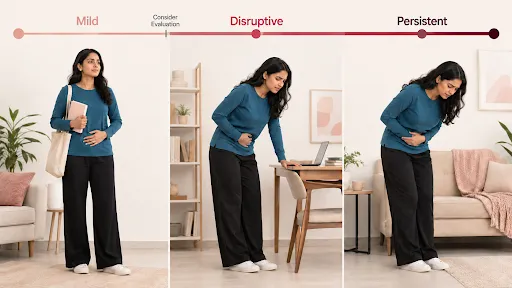
The answer to the question “Is period pain normal?” depends on the pain's intensity, duration, and impact.
During menstruation, the uterus contracts to help shed its lining. These contractions are caused by hormone-like substances called prostaglandins, which can lead to cramps, lower abdominal discomfort, and back pain.
Some discomfort during periods is common. However, pain should not regularly stop you from attending work, studying, exercising, or enjoying daily activities.
| Usually manageable period pain | Pain that needs medical evaluation |
| Mild to moderate cramps | Severe cramps affecting daily activities |
| Improves with simple pain relief methods | Pain not improving despite medication |
| Lasts for the first few days of periods | Pain that continues beyond menstruation |
| Similar intensity every month | Pain becoming worse over time |
According to the American College of Obstetricians and Gynaecologists (ACOG), severe menstrual pain that affects quality of life should be evaluated to rule out underlying conditions.
What “Normal” Period Pain Actually Feels Like
Normal menstrual cramps, also known as primary dysmenorrhoea, usually begin shortly before or during the first few days of bleeding.
Common symptoms may include:
- Mild to moderate lower abdominal cramps
- Aching sensation in the lower back
- Feeling of heaviness around the pelvis
- Temporary fatigue or discomfort
These symptoms generally improve as the period progresses.
However, if your pain feels extreme, appears suddenly after years of comfortable periods, or is associated with other symptoms, it may not be typical menstrual pain.
When Period Pain Signals Something More — Secondary Dysmenorrhoea
Menstrual pain which occurs due to an underlying pelvic condition is referred to as secondary dysmenorrhoea.
Secondary dysmenorrhoea symptoms may include:
- Severe cramps that worsen over time
- Pain during sexual intercourse
- Pain while passing urine or during bowel movements during periods
- Heavy menstrual bleeding
- Bleeding between periods
- Pelvic pain even when you are not menstruating
Unlike primary menstrual cramps, secondary dysmenorrhoea often develops later and may require evaluation to identify the underlying cause.
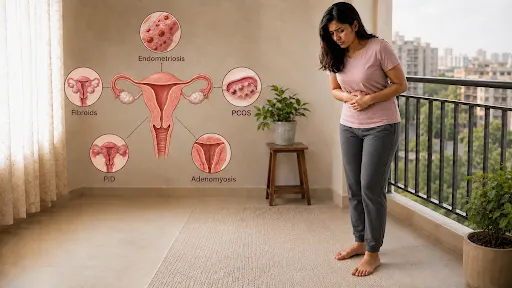
Endometriosis and Period Pain
Endometriosis is one of the important causes of severe menstrual pain. In this condition, tissue similar to the uterine lining grows outside the uterus, causing inflammation and pelvic discomfort.
Women with endometriosis may experience:
- Severe period cramps
- Pelvic pain before and during periods
- Pain during intercourse
- Difficulty conceiving in some cases
Many women delay diagnosis because they assume their pain is just a “bad period.” However, early assessment can help manage symptoms effectively.
Uterine Fibroids and Heavy, Painful Periods
Uterine fibroids are non-cancerous growths that develop in the uterus. Depending on their size and location, they may contribute to heavy bleeding and cramps.
Uterine fibroid period pain may be associated with:
- Increased menstrual flow
- Longer periods
- Pelvic pressure or heaviness
- Painful cramps
Not every fibroid causes symptoms, but women with persistent discomfort should discuss their symptoms with a gynaecologist.
PCOS/PCOD and Painful Periods
Many women ask whether PCOS and painful periods are connected.
PCOS (Polycystic Ovary Syndrome) commonly affects ovulation and hormone balance. While irregular periods are more typical, some women with PCOS may experience uncomfortable periods due to hormonal fluctuations, prolonged gaps between cycles, or heavier bleeding.
Proper evaluation is important because period pain in women with PCOS may have multiple contributing factors.
Pelvic Inflammatory Disease and Adenomyosis
Other conditions that may contribute to painful periods include pelvic inflammatory disease (PID) and adenomyosis.
- Pelvic inflammatory disease: An infection affecting the reproductive organs that may cause pelvic pain and menstrual discomfort.
- Adenomyosis: A condition where tissue similar to the uterine lining grows into the uterine muscle, often causing heavy and painful periods.
Period Pain vs Endometriosis Pain — How to Tell the Difference
Understanding period pain vs endometriosis pain can help women recognise when symptoms need attention.
| Period cramps | Endometriosis-related pain |
| Usually occurs around menstruation | May begin before periods and continue afterwards |
| Often improves within a few days | May become persistent or progressively worse |
| Usually manageable | Can significantly affect daily activities |
| No associated pelvic symptoms | May include pelvic pain, bowel or bladder discomfort |
However, symptoms can overlap. A proper medical assessment is needed for an accurate diagnosis.
Red Flags — When to See a Gynaecologist for Period Pain
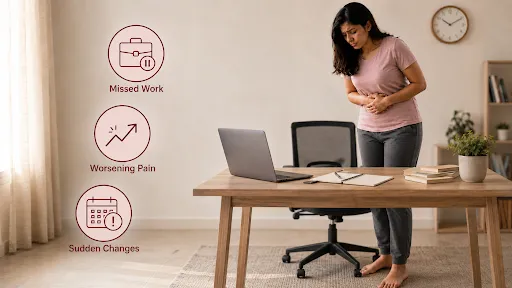
You should consider consulting a doctor if you experience when to see a gynaecologist for period pain symptoms such as:
- Unable to do regular work due to pain.
- Bleeding requiring pad changes every hour
- Pain occurring even when not on period.
- Period pain becoming worse each year.
- Pain during sexual intercourse.
- Sudden changes in your usual menstrual pattern.
- Severe cramps with fever, unusual discharge, or weakness.
These may be severe menstrual cramps warning signs that require further evaluation.
How Gynaecologists Diagnose the Cause of Severe Period Pain
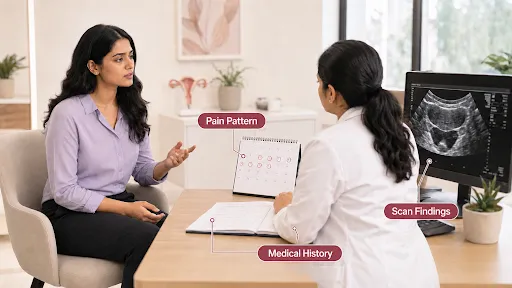
When you visit a gynaecologist for severe period pain, the evaluation usually begins with a review of your complete health history.
I may assess:
- your menstrual cycle pattern,
- pain severity and duration,
- bleeding pattern,
- previous medical history,
- and family history of conditions like endometriosis.
Depending on your symptoms, investigations may include:
| Tests | Purposes |
| Pelvic examination | Helps assess pelvic health |
| Ultrasound scan | Evaluates uterus and ovaries |
| MRI scan (in selected cases) | Provides detailed pelvic imaging |
| Blood tests | Helps evaluate related conditions when required |
The goal is not just to control pain temporarily, but to identify why it's happening.
Painful Periods Treatment Options
Treatment depends on the underlying cause, symptom severity, age, reproductive plans, and overall health.
Available painful periods treatment options may include:
1. Lifestyle and Pain Management
For mild symptoms, some approaches may provide relief:
- Regular physical activity
- Adequate sleep
- Heat therapy
- Stress management
- Maintaining a balanced diet
These measures may support comfort but should not replace medical evaluation when pain is severe.
2. Hormonal Treatment
Doctors may recommend hormonal medicines in selected cases to regulate menstrual cycles and reduce symptoms.
Options may include:
- Hormonal contraceptive methods
- Progesterone-based treatments
- Other hormone-regulating medicines
The choice depends on individual needs and should always be discussed with a qualified doctor.
3. Surgical Options for Underlying Conditions
If conditions such as endometriosis or fibroids are causing significant symptoms, surgical treatment may sometimes be considered.
Minimally invasive procedures such as laparoscopy can help diagnose and treat certain pelvic conditions while reducing recovery time compared with traditional approaches.
Don’t Normalise Pain That Isn’t Normal
Periods can be uncomfortable, but unbearable pain should not become something you learn to tolerate. Persistent cramps, changing symptoms, or pain affecting your daily routine deserve proper evaluation.
As a female gynaecologist in Newtown with 22+ years of experience, I help women understand the cause of their symptoms and choose an appropriate treatment approach.
My approach focuses on:
- Identifying the cause of severe period pain
- Offering personalised treatment options
- Managing conditions like endometriosis, fibroids, and PCOS
- Supporting better menstrual and reproductive health
If your periods are becoming difficult to manage, timely consultation can help you move towards better comfort and confidence.
What People Also Ask
1) How much period pain is considered “normal,” and when does it cross into a medical concern?
Mild cramps that do not affect daily activities are usually considered common. Pain that prevents normal activities, worsens over time, or requires frequent medication should be evaluated by a gynaecologist.
2) Can PCOS/PCOS or PCOD cause unusually painful periods?
PCOS can affect menstrual patterns due to hormonal imbalance. While irregular cycles are more common, some women may experience painful or heavy periods due to related changes.
3) Is it possible to have endometriosis even if my ultrasound looks normal?
Yes. Ultrasound may not always detect all cases of endometriosis. If symptoms strongly suggest the condition, you may need further evaluation.
4) What tests will a gynaecologist run to find the cause of severe period pain?
Depending on symptoms, doctors may recommend a pelvic examination, ultrasound, MRI, or other tests to understand the cause.
5) Can severe period pain affect my fertility if left untreated?
Some conditions associated with severe period pain, such as endometriosis, may affect fertility in certain women. Early diagnosis and management can help protect reproductive health.