



Women today are choosing to start families later due to career goals, personal choices, financial planning, or waiting for the right time. But one question often creates anxiety: “Is 35 too old to get pregnant?”
In this blog, I will help you understand:
- What changes after 35
- What matters more than age for fertility
- When to seek expert guidance for pregnancy planning
As a gynaecologist in Newtown, I often meet women fearing that turning 35 means pregnancy will become unsafe or impossible. Society and online statistics contribute to this. American College of Obstetricians and Gynaecologists (ACOG) states the chance of natural conception is around 20% per month in the early 30s and gradually decreases as women approach 40 (Source). But these numbers don't tell the whole story.
Where Did the “35 Is Too Old” Idea Come From?
The idea that 35 is a strict deadline for pregnancy comes from older medical terminology and statistics.
The term geriatric pregnancy refers to pregnancy in women aged 35 years or older. However, this term is now considered outdated because it can sound alarming and does not accurately represent the health of modern mothers.
Today, doctors often use the term advanced maternal age pregnancy to describe pregnancies where the mother is 35 or older at the time of delivery.
This classification exists because certain pregnancy risks may gradually increase with age. However, it does not mean that every woman above 35 will experience complications.
Age-based categories help doctors provide appropriate monitoring—they do not determine whether a pregnancy will be successful.
What Actually Happens to Fertility After 35?
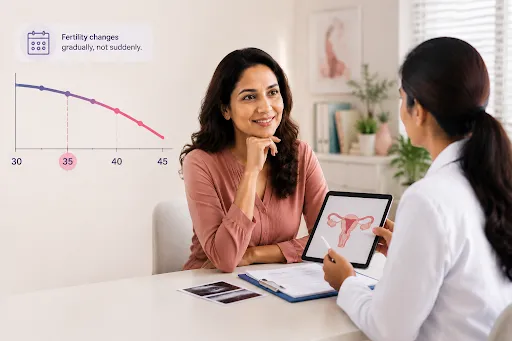
Fertility after 35 gradually changes because women are born with a fixed number of eggs, and both egg quantity and quality reduce naturally with age.
The decline does not happen suddenly on a woman’s 35th birthday. Instead, it is a gradual biological process influenced by several factors, including:
- Egg quantity and quality
- Regularity of ovulation
- Uterine health
- Overall medical condition
- Partner’s sperm health
While increasing age makes getting pregnant more challenging, age alone cannot predict whether an individual woman will conceive naturally or have a healthy pregnancy.
Egg Quality and Age
Egg quality and age are closely connected because chromosomal changes in eggs become more common as women get older.
This may increase the chances of:
- Difficulty conceiving
- Early pregnancy loss
- Certain chromosomal conditions
However, age alone cannot predict an individual woman’s fertility. Some women in their late 30s may have good ovarian reserve, while some younger women may experience fertility challenges.
Ovarian Reserve — Why It Varies Person to Person
Ovarian reserve refers to the remaining number of eggs available in the ovaries.
Factors that may affect ovarian reserve include:
- Age
- Genetics
- Previous ovarian surgery
- Certain medical treatments
- Endometriosis
Tests such as Anti-Müllerian Hormone (AMH), ultrasound assessment of ovarian follicles, and other fertility evaluations can provide information about ovarian reserve.
However, doctors should always interpret these tests alongside a woman’s complete health history.
Is 35 Really Too Old to Get Pregnant? The Honest Answer
No, 35 is not too old to get pregnant.
The chances of conception at 35 may be lower compared with the early 20s or early 30s, but many women continue to have healthy pregnancies during this stage of life.
The chances of getting pregnant at 35 depend on factors beyond age, including:
- Whether ovulation is regular
- Egg and sperm health
- Uterine condition
- Lifestyle factors
- Presence of conditions like PCOS or thyroid disorders
A general understanding:
| Age group | Fertility considerations |
| 20s to early 30s | Higher natural fertility potential |
| Mid-30s | Gradual decline in fertility begins to become more noticeable |
| Late 30s and beyond | More evaluation and monitoring may be recommended |
The important question is not only “How old are you?” but also “What is your reproductive health status?”
Advanced Maternal Age Pregnancy — What “High Risk” Actually Means
An advanced maternal age pregnancy may require closer monitoring because certain risks can become slightly higher with increasing age.
Doctors may classify some pregnancies after 35 as higher risk to ensure timely screening and follow-up.
However, a high-risk pregnancy at age 35 does not mean that complications are guaranteed.
It means doctors may recommend additional care to identify and manage possible concerns early.
Pregnancy Complications Over 35
Some pregnancy complications over 35 may include:
- Increased chance of gestational diabetes
- Higher risk of high blood pressure during pregnancy
- Greater possibility of chromosomal abnormalities
- Increased chance of pregnancy loss
- Higher likelihood of needing closer fetal monitoring
The actual risk varies depending on individual health factors.
Regular antenatal visits, screening tests, and healthy lifestyle habits can significantly support pregnancy care.
Why “High Risk” Doesn’t Mean “Unsafe”
The term “high risk” often creates fear, but medically it means “needs additional attention.”
With proper care, many women over 35 experience healthy pregnancies.
Doctors may recommend:
- Detailed pregnancy planning
- Early antenatal assessment
- Additional scans when required
- Screening for genetic conditions
- Monitoring of blood pressure and blood sugar
The goal is prevention, preparation, and timely management.
What Matters More Than Age for Fertility?
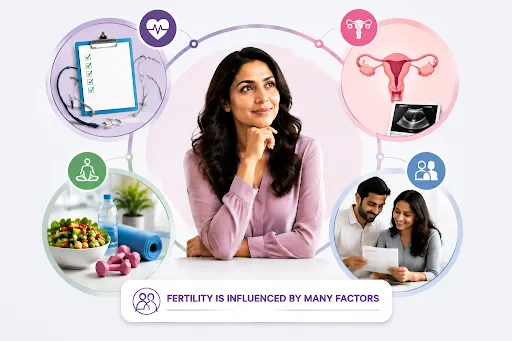
When women ask me what matters more than age for fertility, I explain that age is only one factor among many.
Important considerations include:
Overall Health
Conditions such as diabetes, hypertension, obesity, or autoimmune disorders can influence pregnancy outcomes.
Managing these conditions before conception can improve readiness for pregnancy.
Existing Gynaecological Conditions
Conditions that may affect fertility or pregnancy include:
- PCOS
- Thyroid disorders
- Fibroids
- Endometriosis
- Previous reproductive surgeries
Early diagnosis and management can make a significant difference.
Lifestyle Factors
Healthy habits can support reproductive health:
- Maintaining a healthy weight
- Eating a balanced diet
- Avoiding smoking and excessive alcohol
- Managing stress
- Staying physically active
Partner’s Fertility Factors
Pregnancy depends on both partners. Fertility evaluation should also consider male factors, including sperm count and quality.
When to Start Fertility Testing If You’re 35+
Women under 35 are generally advised to seek fertility evaluation after trying for 12 months without success. For women aged 35 or above, doctors usually recommend seeking advice after 6 months of trying without conception.
You may consider an earlier consultation if you have:
- Irregular periods
- Previous miscarriages
- History of endometriosis
- PCOS
- Previous pelvic surgery
- Known fertility concerns
As a gynaecologist in Newtown, I recommend a personalised approach rather than applying the same timeline to every woman.

For women planning pregnancy after 35, I focus on:
- Reviewing medical and reproductive history
- Assessing fertility factors
- Planning appropriate screenings
- Providing personalised antenatal monitoring
Women with additional pregnancy concerns can benefit from specialised high-risk pregnancy care to ensure closer observation throughout their journey.
Age Is One Factor, Not the Whole Picture
Age does influence fertility, but it does not decide your chances of becoming a mother by itself.
If you are wondering if 35 is too old to get pregnant, remember that your overall health, fertility status, and timely medical care matter equally.
With proper planning, monitoring, and support, many women continue to have healthy pregnancies after 35.
Are you looking for a consultation? With 22+ years of practice, I, as a gynaecologist in Newtown, can help you understand your individual fertility and pregnancy needs with evidence-based guidance and compassionate care.
People Also Have These Questions
1. Is 35 too old to get pregnant naturally?
No. Many women conceive naturally at 35 and beyond. However, fertility gradually declines with age, so understanding your reproductive health becomes more important.
2. What does geriatric pregnancy mean in medical terms?
Geriatric pregnancy was an older term used for pregnancies in women aged 35 or above. Doctors now commonly use the term advanced maternal age pregnancy.
3. Does fertility suddenly decrease after 35?
No. Fertility does not suddenly stop at 35. Instead, egg quantity and quality decline gradually over time.
4. What are the pregnancy risks after 35 years?
Possible risks include gestational diabetes, high blood pressure, chromosomal abnormalities, and pregnancy complications. Regular monitoring helps manage these risks.
5. What tests may be recommended for pregnancy after 35?
Doctors may recommend fertility assessment, blood tests, ultrasound scans, and pregnancy screening tests depending on individual needs.
6. Can women with PCOS get pregnant after 35?
Yes. Many women with PCOS conceive after 35 with proper management, ovulation support when needed, and appropriate pregnancy monitoring.