



Key takeaways
- AMH 0.5 ng/mL at age 30 may indicate low ovarian reserve, but it may not rule out natural pregnancy.
- Low AMH mainly reflects egg quantity, not egg quality, and cannot reliably predict natural conception chances on its own.
- Fertility tests, including AFC, tubal patency and semen analysis, help identify suitable options such as timed intercourse, ovulation induction or IUI.
- IVF is not always necessary for low AMH; consult a female infertility doctor in Newtown for a personalised fertility assessment and timely treatment plan.
An AMH result of 0.5 ng/mL can feel alarming, especially when you are hoping to conceive. As a doctor providing care regarding female infertility, I look at your age, menstrual cycle, scan findings, fallopian tubes and your partner’s sperm health before discussing a plan. Low AMH levels may mean fewer eggs are available, but they don’t mean a woman can't conceive. For complete information, read this blog, which covers the topic in detail.
What Does an AMH of 0.5 Actually Mean?
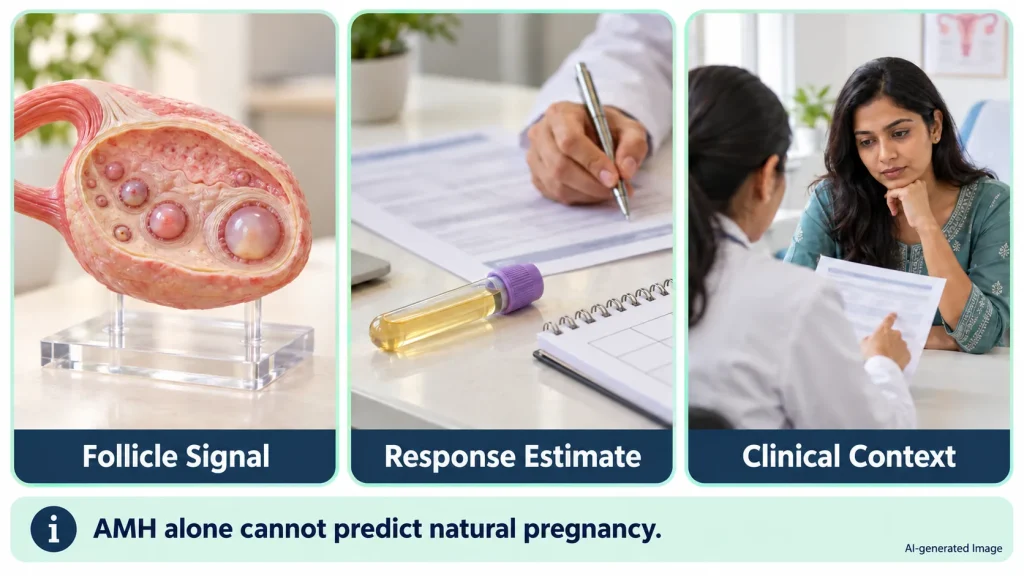
AMH, or anti-Müllerian hormone, is made by small follicles in the ovaries. An AMH of 0.5 ng/mL is often considered low, although interpretation depends on the laboratory, test method, and clinical context. An ovarian reserve test helps estimate how many eggs may respond to stimulation; it does not count every egg or measure the chance of pregnancy on its own.
AMH is a Quantity Marker, Not a Quality Marker
AMH gives us information about egg quality vs egg quantity: it mainly reflects egg quantity. At 30, age is more closely linked to egg quality than AMH alone. AMH and an ultrasound count can help predict how the ovaries may respond to fertility medicines, but they are not reliable stand-alone tests of whether someone can conceive naturally.
Is AMH 0.5 Low for a 30-Year-Old?
A result of 0.5 ng/mL is generally low for many 30-year-olds and may suggest diminished ovarian reserve. It deserves timely assessment, but it is not a diagnosis of infertility. A low result does not mean you have no eggs left or that pregnancy is impossible.
Low AMH Pregnancy Without IVF: What the Evidence Says
The chances of getting pregnant naturally with low AMH cannot be worked out from the AMH result alone. AMH is not a reliable predictor of spontaneous pregnancy. The result is one part of a wider fertility assessment—not a yes-or-no answer.
Why Many Women with Low AMH Still Conceive Naturally?
If ovulation occurs, an egg is released, a sperm reaches it, and the fallopian tube is open, conception may still occur. Some women with low AMH have regular cycles and conceive without IVF. The ovarian reserve result may be more useful for planning treatment and estimating response to stimulation than for predicting a natural pregnancy.
When Natural Conception Gets Harder?
Age, irregular or absent ovulation, blocked tubes, sperm-related factors and endometriosis can affect conception. PCOS (also called PCOD in India) may disrupt ovulation; it is a separate issue from low AMH, and the two results need to be considered together. When more than one factor is present, waiting without an assessment may delay a suitable plan.
To see what else can get in the way, read about the 10 causes of female infertility.
Tests to Get Done Before Deciding on IVF
I review your history and test results together before recommending treatment. An antral follicle count (AFC) on ultrasound, alongside AMH, can help assess the ovarian response expected with fertility medicines. Neither result alone confirms whether you can or cannot conceive.
AFC Scan, FSH, Estradiol, Thyroid, Prolactin
An ultrasound checks the AFC and looks at the uterus and ovaries. Depending on your cycle and symptoms, I may also check FSH and estradiol, thyroid function and prolactin. These tests assess different parts of reproductive health; if results don't match, I interpret them alongside your age, cycles, and scan.
Tubal Patency and Semen Analysis
A tubal patency test checks whether the fallopian tubes are open. A semen analysis assesses sperm count, movement and shape. Both matter: fertility evaluation should consider both partners rather than focusing on AMH alone.
Fertility Treatment Without IVF: Your Options
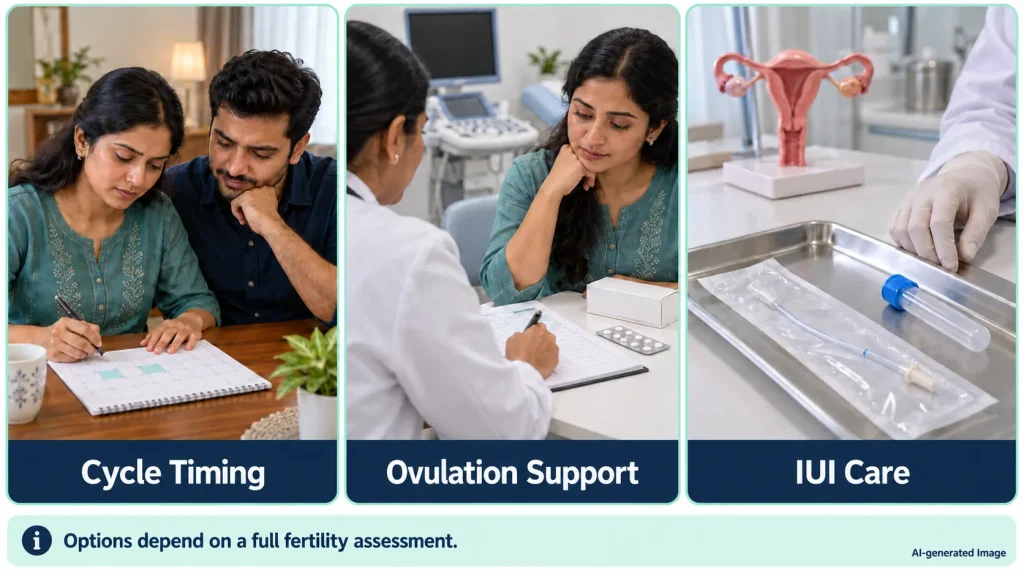
Depending on the findings, fertility treatment without IVF may be reasonable. The plan could include timing intercourse, treating a cause of irregular ovulation or considering IUI treatment. These options are not suitable for every couple; blocked tubes or significant sperm concerns, for example, may change the recommendation.
Timed Intercourse with Ovulation Tracking
If your cycles are regular and you have no other concerns, ovulation tracking can help identify the fertile window. Getting intimate every one to two days during that window is recommended. If your cycles are irregular, the fertile window is harder to predict, so it helps to understand how irregular cycles can affect pregnancy and change your approach. This is a simple first step, but it should fit your history and how long you have been trying.
Ovulation Induction and IUI
For some ovulation problems, ovulation induction uses prescribed medicine to support egg release, with monitoring to reduce risks. In IUI treatment, prepared sperm is placed in the uterus around ovulation. The choice depends on the diagnosis, tube status, sperm results and age—not on AMH alone.
Treating Hidden Problems (Fibroids, Polyps, Endometriosis, PCOS)
Fibroids or polyps that affect the uterine cavity may need further assessment. Endometriosis can affect fertility, while PCOS may need support with ovulation. Treatment is individual: not every fibroid or polyp needs removal, and surgery itself can carry risks.
Lifestyle and Medical Support for Low AMH
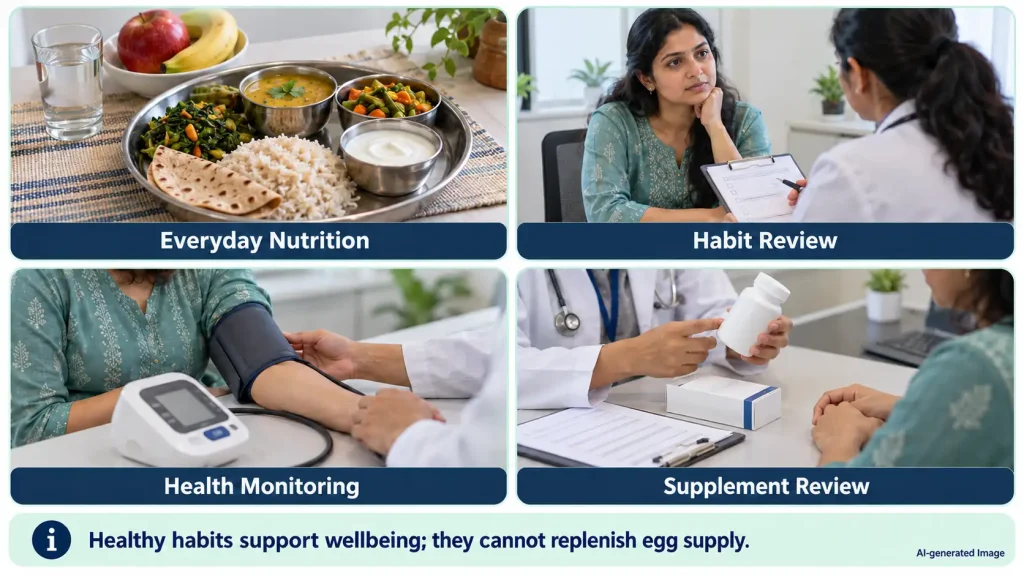
No diet or supplement has been proven to restore the egg supply or reliably raise AMH in a way that improves natural fertility. A balanced diet, not smoking, limiting alcohol and managing long-term health conditions can support overall health, but these steps cannot reverse diminished ovarian reserve. Avoid starting supplements or hormone medicines without medical advice.
When is IVF Actually Needed?
IVF is not automatically required because AMH is 0.5. It may be discussed if other tests show a factor that makes natural conception or IUI less suitable, or if initial treatment has not worked. At 30, a clinician may agree on a time-bound plan, perhaps three to six months depending on the full assessment, and then review progress. Known fertility problems call for earlier evaluation; general family planning guidance recommends assessment after 12 months of trying for women under 35, or sooner when a relevant condition is known.
Consult a Female Infertility Doctor
As an obstetrician and gynaecologist with MBBS and DNB qualifications and more than 22 years of experience. If symptoms start appearing more frequently, you should consult an expert. I am here to offer guidance and discuss low AMH levels and your next steps.
Wrapping Up
AMH 0.5 at age 30 is a reason to understand your full fertility picture, not a verdict that pregnancy is impossible without IVF. A timely review of ovulation, tubes, uterus and sperm health can help you choose a suitable next step. Consult a female infertility doctor in Newtown to discuss your results and options.
Frequently Asked Questions
Can AMH go up again after being low?
AMH can vary between tests, but a higher reading does not mean the egg supply has been restored. No treatment is proven to reliably rebuild ovarian reserve.
Is repeating the test worthwhile, and do supplements or diets change the number?
A repeat test may be considered if the result does not fit the clinical picture or the laboratory method is uncertain. Supplements or diets have not been proven to restore egg supply; discuss them with a clinician before use.
Does low AMH increase the risk of miscarriage? How does it relate to egg quality?
AMH alone does not reliably predict miscarriage. It mainly reflects egg quantity; age and other health factors are more useful when assessing egg quality and pregnancy risk.
Is AMH the same as FSH and AFC? Which test is more reliable, and what if the results disagree?
No. AMH is a blood test, FSH is a hormone test often timed early in the cycle, and AFC is counted on ultrasound. Each offers different information. If they disagree, the results should be reviewed together with age, cycle history, and scan findings.
If AMH is 0.5, is it okay to freeze eggs? Is it worth it, and what is the best age?
Egg freezing is a personal decision based on age, plans and expected response to stimulation. A low AMH may mean fewer eggs are collected in a cycle, and frozen eggs generally require IVF later. A fertility specialist can explain likely benefits and limits for your situation.
Does a husband’s sperm quality matter with a low AMH? Which male tests should be done first?
Yes. Sperm health can affect the chance of pregnancy, so assessment should involve both partners. A semen analysis is usually the first test; further checks depend on its findings.