


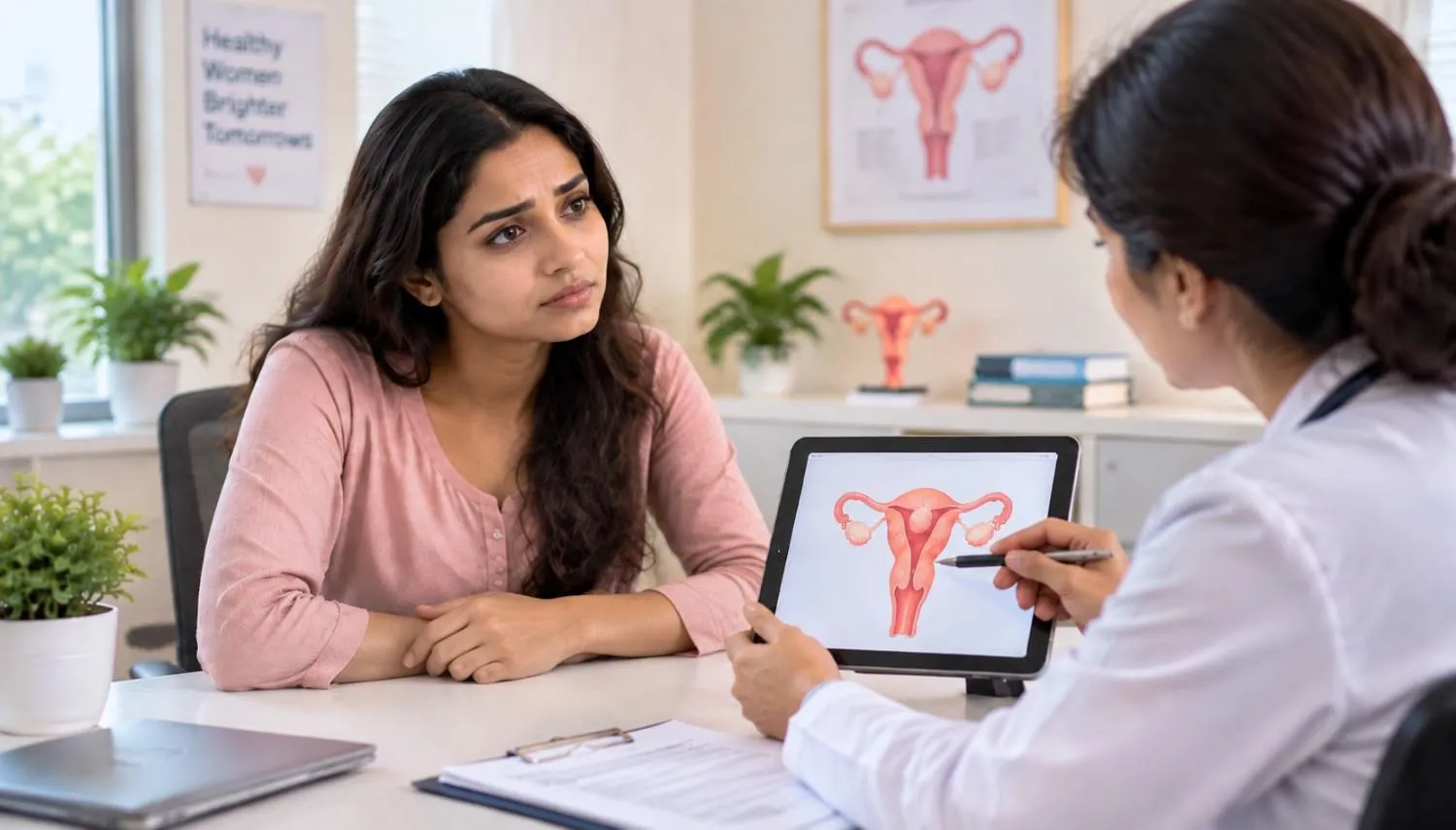
Being diagnosed with fibroids can bring many concerns, especially for women planning their families. One of the biggest worries is whether the uterus needs removal due to these non-cancerous tumours. Well, the answer in this case — not always.
As a laparoscopic surgeon with decades of practice, I often meet women with future pregnancy plans who have this fear. The good news is these benign tumours can often be removed while preserving the uterus through a minimally invasive fibroid surgery called myomectomy. In this blog, to clear all doubts, I will explain:
- How fibroids can be removed without removing the uterus
- The difference between myomectomy and hysterectomy
- Who may benefit from laparoscopic fibroid removal and what recovery involves
Myomectomy vs Hysterectomy — Understanding the Real Difference
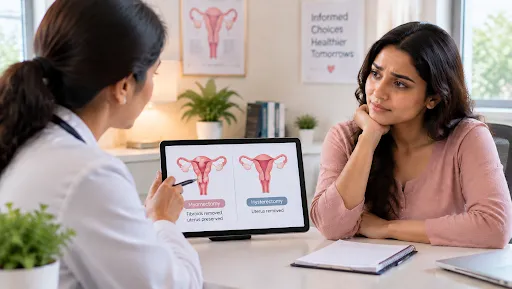
Myomectomy and hysterectomy are often confused, but they are different procedures with different goals. The difference between myomectomy and hysterectomy depends on what the surgeon removes during surgery.
| Procedure | What is removed? | Uterus preserved? |
| Myomectomy | Only fibroids | Yes |
| Hysterectomy | Entire uterus | No |
What a Myomectomy Actually Removes
A myomectomy removes only the benign tumours while preserving healthy uterine tissue.
During this procedure, I carefully remove these growths while aiming to maintain the structure and function of the uterus.
Myomectomy may be considered for women experiencing:
- Heavy menstrual bleeding
- Pelvic pressure or discomfort
- Fibroid-related pain
- Fertility concerns linked to benign tumours
The goal is to reduce symptoms while preserving the uterus whenever possible.
Why Hysterectomy Isn’t Always the Default Answer
A hysterectomy can be an effective treatment for some women with severe symptoms or complex fibroid conditions.
However, it may not always be the first option for women who:
- Want to preserve fertility
- Wish to keep their uterus
- Have non-malignant tumours that can be removed separately
A detailed assessment helps decide whether uterus-preserving treatment is suitable.
How Laparoscopic Myomectomy Works
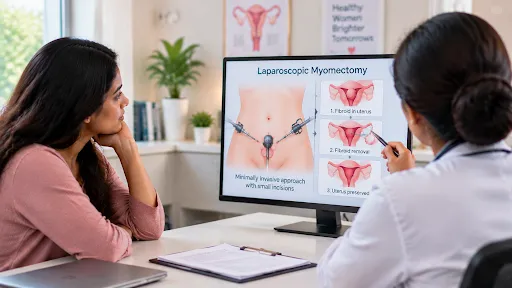
The laparoscopic myomectomy procedure is an advanced technique used to remove fibroids through small abdominal incisions.
A thin camera called a laparoscope helps provide a clear view of the uterus. This allows precise removal while limiting damage to surrounding tissues.
The Minimally Invasive Approach Explained
Minimally invasive fibroid surgery focuses on effective treatment with less surgical impact.
Compared with traditional open surgery, laparoscopic procedures may offer:
- Smaller cuts
- Less post-operative discomfort
- Reduced blood loss
- Faster recovery
- Earlier return to daily activities
However, laparoscopic surgery is not suitable for every such case. The decision depends on individual factors.
Uterus-Sparing Surgery — How the Uterus Is Preserved
Uterus-sparing fibroid surgery aims to remove fibroids while maintaining the uterus.
During laparoscopic myomectomy, the focus is to:
- Remove problematic tumours
- Preserve healthy uterine tissue
- Support future pregnancy plans wherever possible
- Improve symptoms caused by benign tumours
For women who wish to have children, preserving the uterus can be an important part of treatment planning.
Who Is Eligible for This Procedure?
Not every woman with non-cancerous tumours needs surgery, and not every such lump can be removed through laparoscopy. The decision depends on:
- Fibroid size and location
- Number of these growths
- Severity of symptoms
- Overall health
- Future pregnancy plans
The candidates for laparoscopic myomectomy are usually women who have:
- Fibroids causing heavy bleeding, pain, or pressure symptoms
- Non-cancerous growths affecting fertility or pregnancy planning
- Non-malignant growths that can be safely accessed through a laparoscopic approach
- A desire to preserve the uterus
Before recommending surgery, I evaluate the pattern and overall health to choose the safest treatment approach.
Fibroid Size, Number and Location That Matter
Fibroid size and location play an important role in deciding whether laparoscopic removal is suitable. Non-cancerous growths can develop in different areas of the uterus, including:
- Submucosal fibroids: Develop inside the uterine cavity and may affect bleeding or fertility
- Intramural fibroids: Grow within the uterine muscle
- Subserosal fibroids: Develop on the outer surface of the uterus
For women exploring treatment options for large fibroids, size alone does not determine the treatment. I also consider:
- Number of tumours
- Their exact location
- Symptoms they are causing
- Impact on the uterus
Some larger non-malignant tumours may still be managed laparoscopically in selected cases, while others may require a different surgical approach.
When Laparoscopic Removal May Not Be Advised
Although laparoscopic surgery is suitable for many women, it may not be recommended in certain situations.
This may include:
- Very large or multiple tumours
- Growth developed in difficult locations
- Complex surgical situations
- Health conditions that increase surgical risks
A detailed consultation helps determine whether laparoscopic removal is the safest option.
Fibroids, Fertility and Future Pregnancy
Many women worry that fibroids may affect their ability to conceive. The impact depends mainly on the size, location, and how they affect the uterus.
Does Removing Fibroids Improve Chances of Conceiving?
In some women, removal can improve fertility, especially when these benign tumours:
- Affect the uterine cavity
- Interfere with implantation
- Distort the shape of the uterus
However, fertility depends on several factors, including:
- Age
- Egg quality
- Ovulation
- Fallopian tube health
- Partner’s sperm quality
The link between fibroids and fertility after surgery varies from person to person. A proper fertility assessment helps understand whether a removal may support pregnancy planning.
Pregnancy Planning After Myomectomy
After myomectomy, the uterus needs adequate time to heal before pregnancy.
The recommended waiting period depends on:
- Surgical technique used
- Depth of fibroid removal
- Number and location of tumours removed
- Individual healing process
During follow-up visits, I guide women on pregnancy planning, antenatal care, and any post-surgery precautions.
Recovery and What to Expect After Surgery
Many women are concerned about recovery after fibroid surgery. Compared with traditional open surgery, laparoscopic procedures generally involve smaller incisions and a quicker recovery process in suitable cases.
Hospital Stay and Return to Normal Activity
Fibroid removal recovery time depends on the surgery's complexity and individual healing.
Many women may experience:
- Shorter hospital stay
- Mild discomfort for a few days
- Gradual improvement in daily activities
- Return to routine work within a few weeks
Following post-operative instructions and attending follow-up appointments help support smooth recovery.
Possible Risks and Complications
Like any surgery, laparoscopic tumour removal also has certain risks.
The possible risks of laparoscopic fibroid surgery may include:
- Bleeding
- Infection
- Injury to nearby organs (rare)
- Scar tissue formation
- Fibroid recurrence
A careful evaluation and experienced surgical approach help minimise complications and improve outcomes.
What Matters is Talking to the Right Specialist
Fibroids do not always mean that the uterus needs to be removed.
For many women, laparoscopic myomectomy offers a uterus-preserving option to remove the non-malignant tumours while maintaining future pregnancy possibilities. The right treatment depends on:
- Characteristics
- Symptoms
- Overall health
- Fertility goals
As a minimally invasive laparoscopic surgeon, I focus on understanding each woman’s concerns and recommending treatment based on individual needs.
If you or a loved one is looking for a gynaecologist for fibroid surgery in Newtown, Kolkata, choose a specialist who explains the suitable options clearly and supports you at every step.
What People Commonly Ask
Can all types of fibroids be removed laparoscopically?
No. Suitability for laparoscopic removal depends on the size, number, location, and complexity of the non-cancerous growths. Some cases may require other treatment approaches.
Will fibroids grow back after a laparoscopic myomectomy?
Fibroids can sometimes develop again after myomectomy because the uterus remains in place. Regular follow-up helps monitor any future changes.
How long does it take to recover from laparoscopic fibroid surgery?
Recovery varies depending on the procedure and individual healing. Many women gradually return to normal activities within a few weeks.
Is laparoscopic myomectomy safe if you want to have children?
Laparoscopic myomectomy is a uterus-preserving procedure and may be suitable for women who wish to maintain future pregnancy options. The decision depends on individual factors.
How to know if myomectomy or a hysterectomy?
The choice depends on symptoms, size and location, overall health, age, and fertility goals. A gynaecological evaluation helps determine the most suitable option.